🚚 Free Worldwide Shipping on All Orders!Shop Now
Longsnout Seahorse - Male - Aquacultured - Australia
Hippocampus reidi
Seahorses are a very interesting species of fish due to their unique body shape and distinctive swimming and hitching behavior. Seahorses are recommended for more advanced hobbyists due to their specific care requirements, and are sensitive to fluctuations in water parameters, requiring pristine water quality and cooler water temperatures around 75 degrees. Flow should not be strong or direct as the seahorse are not strong swimmers. In their natural habitat they prefer to live among seagrass and gorgonians and will curl their tail around these plants “hitching” in the aquarium. Use caution when choosing tank mates since they are extremely docile, so fish such as mandarins, small gobies, and firefish make ideal tankmates, along with other seahorses and pipefish. The Reidi Seahorse is a slow and methodical feeder, so it’s best to offer small feedings several times per day. These Aquacultured seahorses once adjusted to their new surrounding will readily take frozen mysis shrimp and enriched frozen brine shrimp, or live adult brine shrimp. Hippocampus reidi is a species of seahorses that belongs to the family Syngnathidae. This Aquacultured species reaches an adult size of 7 inches and are found in North Carolina to Bermuda and south to Brazil in the Western Atlantic Ocean.
Seahorses are a very interesting species of fish due to their unique body shape and distinctive swimming and hitching behavior. Seahorses are recommended for more advanced hobbyists due to their specific care requirements, and are sensitive to fluctuations in water parameters, requiring pristine water quality and cooler water temperatures around 75 degrees. Flow should not be strong or direct as the seahorse are not strong swimmers. In their natural habitat they prefer to live among seagrass and gorgonians and will curl their tail around these plants “hitching” in the aquarium. Use caution when choosing tank mates since they are extremely docile, so fish such as mandarins, small gobies, and firefish make ideal tankmates, along with other seahorses and pipefish. The Reidi Seahorse is a slow and methodical feeder, so it’s best to offer small feedings several times per day. These Aquacultured seahorses once adjusted to their new surrounding will readily take frozen mysis shrimp and enriched frozen brine shrimp, or live adult brine shrimp. Hippocampus reidi is a species of seahorses that belongs to the family Syngnathidae. This Aquacultured species reaches an adult size of 7 inches and are found in North Carolina to Bermuda and south to Brazil in the Western Atlantic Ocean.
Product Information
Product Information
Shipping & Returns
Shipping & Returns
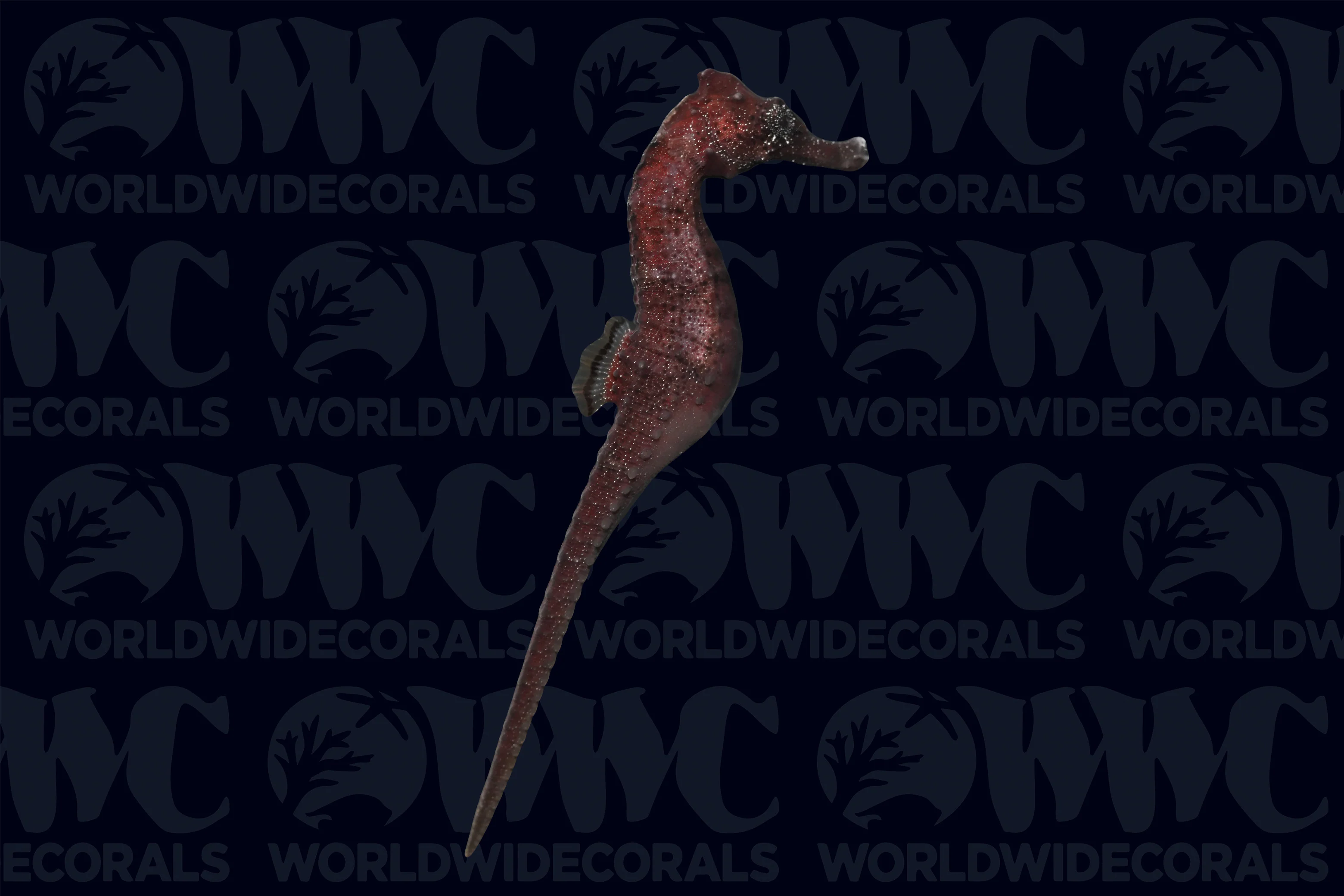
Longsnout Seahorse - Male - Aquacultured - Australia
Longsnout Seahorse - Male - Aquacultured - Australia
Hippocampus reidi
Seahorses are a very interesting species of fish due to their unique body shape and distinctive swimming and hitching behavior. Seahorses are recommended for more advanced hobbyists due to their specific care requirements, and are sensitive to fluctuations in water parameters, requiring pristine water quality and cooler water temperatures around 75 degrees. Flow should not be strong or direct as the seahorse are not strong swimmers. In their natural habitat they prefer to live among seagrass and gorgonians and will curl their tail around these plants “hitching” in the aquarium. Use caution when choosing tank mates since they are extremely docile, so fish such as mandarins, small gobies, and firefish make ideal tankmates, along with other seahorses and pipefish. The Reidi Seahorse is a slow and methodical feeder, so it’s best to offer small feedings several times per day. These Aquacultured seahorses once adjusted to their new surrounding will readily take frozen mysis shrimp and enriched frozen brine shrimp, or live adult brine shrimp. Hippocampus reidi is a species of seahorses that belongs to the family Syngnathidae. This Aquacultured species reaches an adult size of 7 inches and are found in North Carolina to Bermuda and south to Brazil in the Western Atlantic Ocean.
Seahorses are a very interesting species of fish due to their unique body shape and distinctive swimming and hitching behavior. Seahorses are recommended for more advanced hobbyists due to their specific care requirements, and are sensitive to fluctuations in water parameters, requiring pristine water quality and cooler water temperatures around 75 degrees. Flow should not be strong or direct as the seahorse are not strong swimmers. In their natural habitat they prefer to live among seagrass and gorgonians and will curl their tail around these plants “hitching” in the aquarium. Use caution when choosing tank mates since they are extremely docile, so fish such as mandarins, small gobies, and firefish make ideal tankmates, along with other seahorses and pipefish. The Reidi Seahorse is a slow and methodical feeder, so it’s best to offer small feedings several times per day. These Aquacultured seahorses once adjusted to their new surrounding will readily take frozen mysis shrimp and enriched frozen brine shrimp, or live adult brine shrimp. Hippocampus reidi is a species of seahorses that belongs to the family Syngnathidae. This Aquacultured species reaches an adult size of 7 inches and are found in North Carolina to Bermuda and south to Brazil in the Western Atlantic Ocean.
Select Size
Select Lot
From $83.65
Original: $238.99
-65%Longsnout Seahorse - Male - Aquacultured - Australia—
$238.99
$83.65Product Information
Product Information
Shipping & Returns
Shipping & Returns
Description
Hippocampus reidi
Seahorses are a very interesting species of fish due to their unique body shape and distinctive swimming and hitching behavior. Seahorses are recommended for more advanced hobbyists due to their specific care requirements, and are sensitive to fluctuations in water parameters, requiring pristine water quality and cooler water temperatures around 75 degrees. Flow should not be strong or direct as the seahorse are not strong swimmers. In their natural habitat they prefer to live among seagrass and gorgonians and will curl their tail around these plants “hitching” in the aquarium. Use caution when choosing tank mates since they are extremely docile, so fish such as mandarins, small gobies, and firefish make ideal tankmates, along with other seahorses and pipefish. The Reidi Seahorse is a slow and methodical feeder, so it’s best to offer small feedings several times per day. These Aquacultured seahorses once adjusted to their new surrounding will readily take frozen mysis shrimp and enriched frozen brine shrimp, or live adult brine shrimp. Hippocampus reidi is a species of seahorses that belongs to the family Syngnathidae. This Aquacultured species reaches an adult size of 7 inches and are found in North Carolina to Bermuda and south to Brazil in the Western Atlantic Ocean.
Seahorses are a very interesting species of fish due to their unique body shape and distinctive swimming and hitching behavior. Seahorses are recommended for more advanced hobbyists due to their specific care requirements, and are sensitive to fluctuations in water parameters, requiring pristine water quality and cooler water temperatures around 75 degrees. Flow should not be strong or direct as the seahorse are not strong swimmers. In their natural habitat they prefer to live among seagrass and gorgonians and will curl their tail around these plants “hitching” in the aquarium. Use caution when choosing tank mates since they are extremely docile, so fish such as mandarins, small gobies, and firefish make ideal tankmates, along with other seahorses and pipefish. The Reidi Seahorse is a slow and methodical feeder, so it’s best to offer small feedings several times per day. These Aquacultured seahorses once adjusted to their new surrounding will readily take frozen mysis shrimp and enriched frozen brine shrimp, or live adult brine shrimp. Hippocampus reidi is a species of seahorses that belongs to the family Syngnathidae. This Aquacultured species reaches an adult size of 7 inches and are found in North Carolina to Bermuda and south to Brazil in the Western Atlantic Ocean.