🚚 Free Worldwide Shipping on All Orders!Shop Now
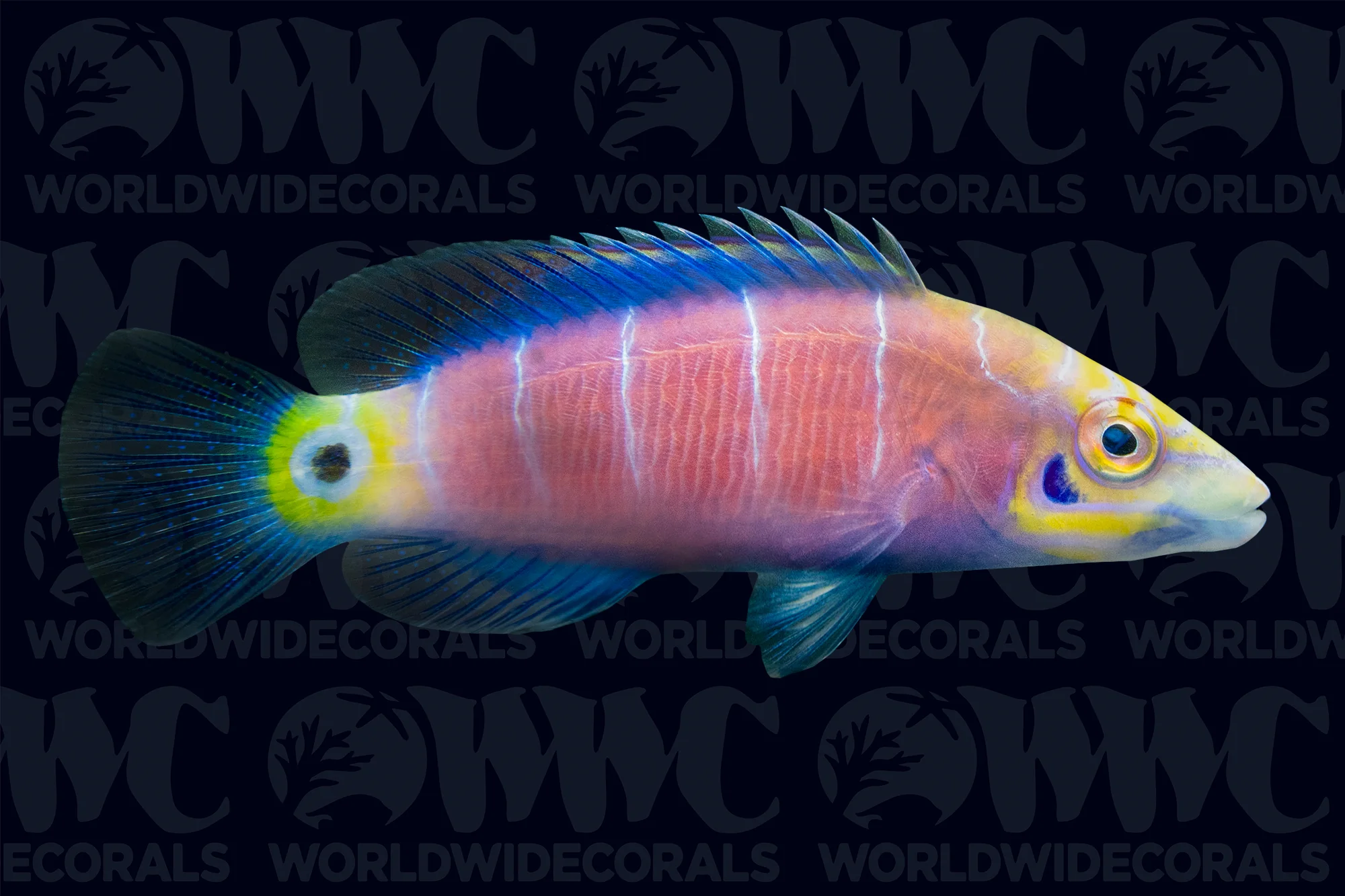
Lineatus Fairy Wrasse - New Caledonia
Cirrhilabrus lineatus
The Cirrhilabrus Wrasse is a genus that contains reef safe and exquisitely colored species that are also known for being very hardy. When starting a new aquarium, the Lineatus Fairy Wrasse can live in groups, but should be added last since they can be harassed by others. They do best with a varied diet of frozen meaty foods and marine pellets. Nori Seaweed can be offered to add variety to their diet. Feeding them multiple times a day is recommended since they are very active. Beware: They are jumpers, so a covered aquarium is necessary. They have a small adult size of 5”, which is also why they are so desired by hobbyists. This wrasse is considered to be one of the most beautiful in its genus and is highly sought-after. The Lineatus Fairy Wrasse inhabits clear outer reef slopes in the Western Central Pacific up to 55 meters deep.
The Cirrhilabrus Wrasse is a genus that contains reef safe and exquisitely colored species that are also known for being very hardy. When starting a new aquarium, the Lineatus Fairy Wrasse can live in groups, but should be added last since they can be harassed by others. They do best with a varied diet of frozen meaty foods and marine pellets. Nori Seaweed can be offered to add variety to their diet. Feeding them multiple times a day is recommended since they are very active. Beware: They are jumpers, so a covered aquarium is necessary. They have a small adult size of 5”, which is also why they are so desired by hobbyists. This wrasse is considered to be one of the most beautiful in its genus and is highly sought-after. The Lineatus Fairy Wrasse inhabits clear outer reef slopes in the Western Central Pacific up to 55 meters deep.
Product Information
Product Information
Shipping & Returns
Shipping & Returns

Lineatus Fairy Wrasse - New Caledonia
Lineatus Fairy Wrasse - New Caledonia
Cirrhilabrus lineatus
The Cirrhilabrus Wrasse is a genus that contains reef safe and exquisitely colored species that are also known for being very hardy. When starting a new aquarium, the Lineatus Fairy Wrasse can live in groups, but should be added last since they can be harassed by others. They do best with a varied diet of frozen meaty foods and marine pellets. Nori Seaweed can be offered to add variety to their diet. Feeding them multiple times a day is recommended since they are very active. Beware: They are jumpers, so a covered aquarium is necessary. They have a small adult size of 5”, which is also why they are so desired by hobbyists. This wrasse is considered to be one of the most beautiful in its genus and is highly sought-after. The Lineatus Fairy Wrasse inhabits clear outer reef slopes in the Western Central Pacific up to 55 meters deep.
The Cirrhilabrus Wrasse is a genus that contains reef safe and exquisitely colored species that are also known for being very hardy. When starting a new aquarium, the Lineatus Fairy Wrasse can live in groups, but should be added last since they can be harassed by others. They do best with a varied diet of frozen meaty foods and marine pellets. Nori Seaweed can be offered to add variety to their diet. Feeding them multiple times a day is recommended since they are very active. Beware: They are jumpers, so a covered aquarium is necessary. They have a small adult size of 5”, which is also why they are so desired by hobbyists. This wrasse is considered to be one of the most beautiful in its genus and is highly sought-after. The Lineatus Fairy Wrasse inhabits clear outer reef slopes in the Western Central Pacific up to 55 meters deep.
Select Size
Select Lot
From $96.25
Original: $274.99
-65%Lineatus Fairy Wrasse - New Caledonia—
$274.99
$96.25Product Information
Product Information
Shipping & Returns
Shipping & Returns
Description
Cirrhilabrus lineatus
The Cirrhilabrus Wrasse is a genus that contains reef safe and exquisitely colored species that are also known for being very hardy. When starting a new aquarium, the Lineatus Fairy Wrasse can live in groups, but should be added last since they can be harassed by others. They do best with a varied diet of frozen meaty foods and marine pellets. Nori Seaweed can be offered to add variety to their diet. Feeding them multiple times a day is recommended since they are very active. Beware: They are jumpers, so a covered aquarium is necessary. They have a small adult size of 5”, which is also why they are so desired by hobbyists. This wrasse is considered to be one of the most beautiful in its genus and is highly sought-after. The Lineatus Fairy Wrasse inhabits clear outer reef slopes in the Western Central Pacific up to 55 meters deep.
The Cirrhilabrus Wrasse is a genus that contains reef safe and exquisitely colored species that are also known for being very hardy. When starting a new aquarium, the Lineatus Fairy Wrasse can live in groups, but should be added last since they can be harassed by others. They do best with a varied diet of frozen meaty foods and marine pellets. Nori Seaweed can be offered to add variety to their diet. Feeding them multiple times a day is recommended since they are very active. Beware: They are jumpers, so a covered aquarium is necessary. They have a small adult size of 5”, which is also why they are so desired by hobbyists. This wrasse is considered to be one of the most beautiful in its genus and is highly sought-after. The Lineatus Fairy Wrasse inhabits clear outer reef slopes in the Western Central Pacific up to 55 meters deep.