🚚 Free Worldwide Shipping on All Orders!Shop Now
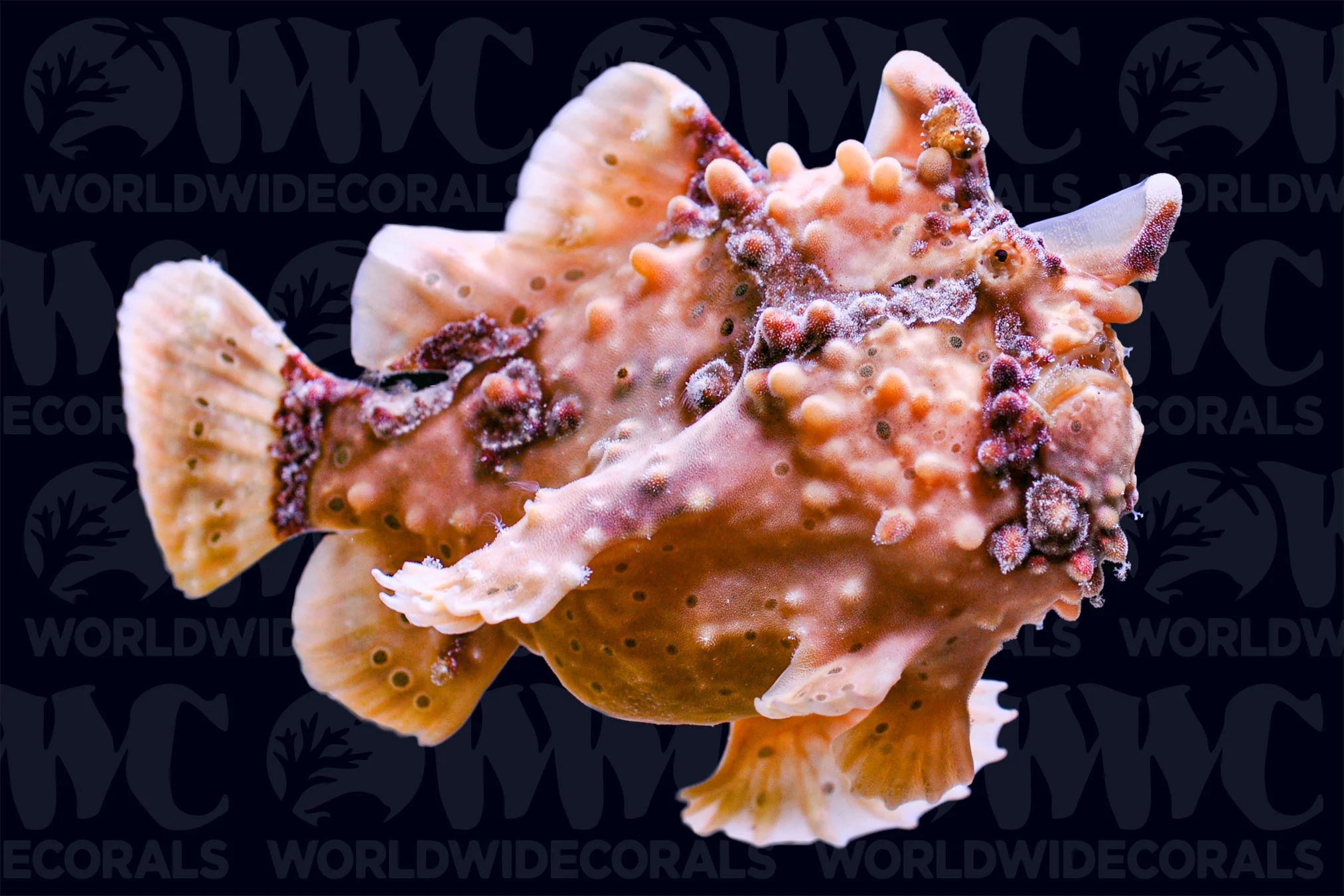
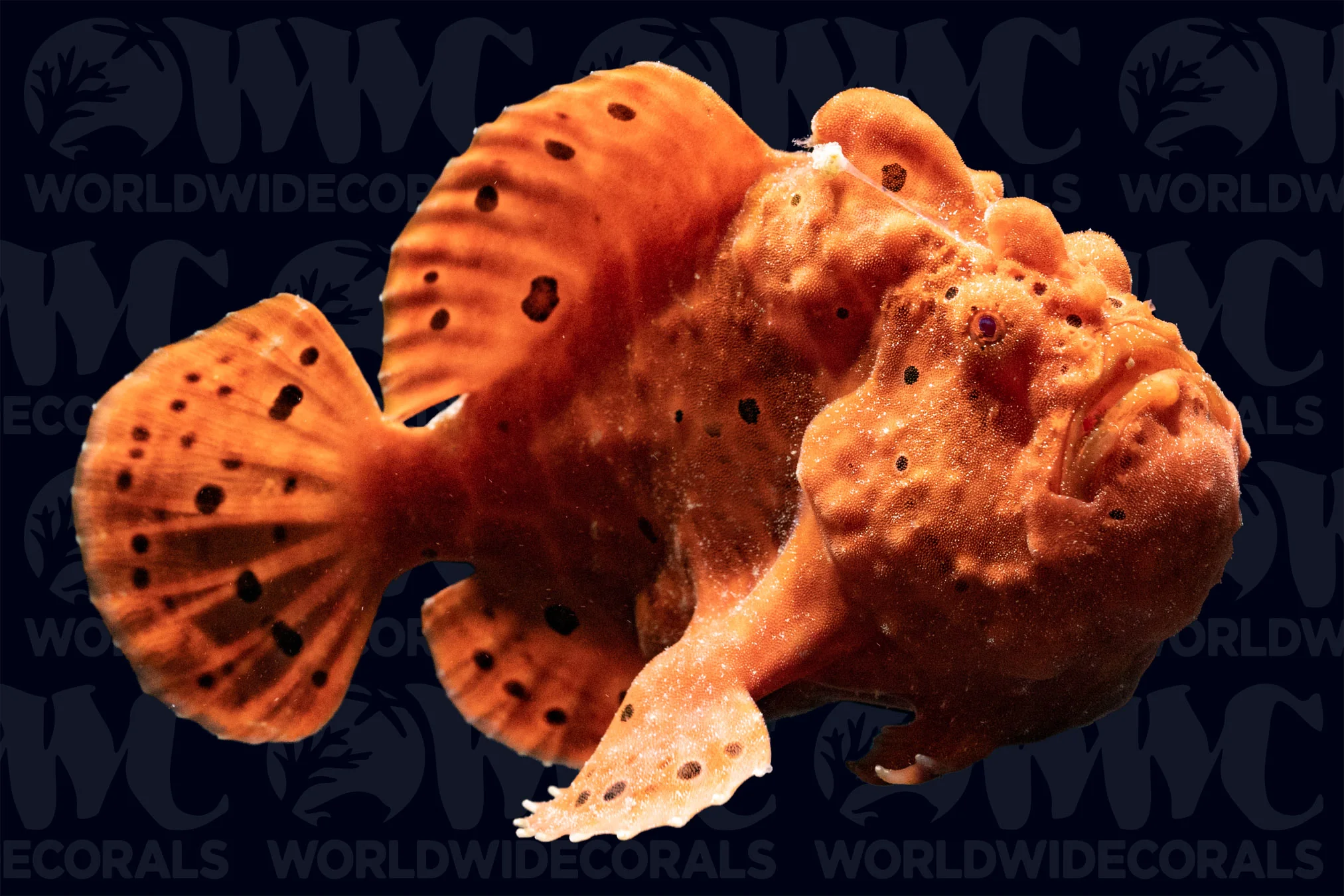
Shaggy Hispid Anglerfish - Philippines
Antennarius hispidus
Anglers within this genus are not considered reef-safe due to their tendency to prey on fish or invertebrates small enough to fit into their mouths, yet they generally coexist well with corals. These fish possess the remarkable ability to change their coloration to blend with their surroundings. Lacking swim bladders, Anglerfish typically dwell near the bottom, so it's important to furnish their habitat with smooth rocks and substrate to prevent injury. Their coloration varies from white, light yellow, or tan to orange or black, sometimes in combination. Hispid Anglers, as carnivores, thrive on a diverse diet includes live foods such as fish, crustaceans, clams, and other meaty marine fare. Due to their slow metabolism, cautious feeding is advised to avoid overfeeding. Juveniles require feeding 3-4 times weekly, while adults suffice with a couple of feedings per week. These Anglers can reach up to 8 inches in size, requiring aquariums of at least 50 gallons or larger. In their natural habitat, Hispid Anglers frequent coral reefs with still waters in the Indo-West Pacific Ocean, typically at depths of up to 300 feet.
Anglers within this genus are not considered reef-safe due to their tendency to prey on fish or invertebrates small enough to fit into their mouths, yet they generally coexist well with corals. These fish possess the remarkable ability to change their coloration to blend with their surroundings. Lacking swim bladders, Anglerfish typically dwell near the bottom, so it's important to furnish their habitat with smooth rocks and substrate to prevent injury. Their coloration varies from white, light yellow, or tan to orange or black, sometimes in combination. Hispid Anglers, as carnivores, thrive on a diverse diet includes live foods such as fish, crustaceans, clams, and other meaty marine fare. Due to their slow metabolism, cautious feeding is advised to avoid overfeeding. Juveniles require feeding 3-4 times weekly, while adults suffice with a couple of feedings per week. These Anglers can reach up to 8 inches in size, requiring aquariums of at least 50 gallons or larger. In their natural habitat, Hispid Anglers frequent coral reefs with still waters in the Indo-West Pacific Ocean, typically at depths of up to 300 feet.
Product Information
Product Information
Shipping & Returns
Shipping & Returns
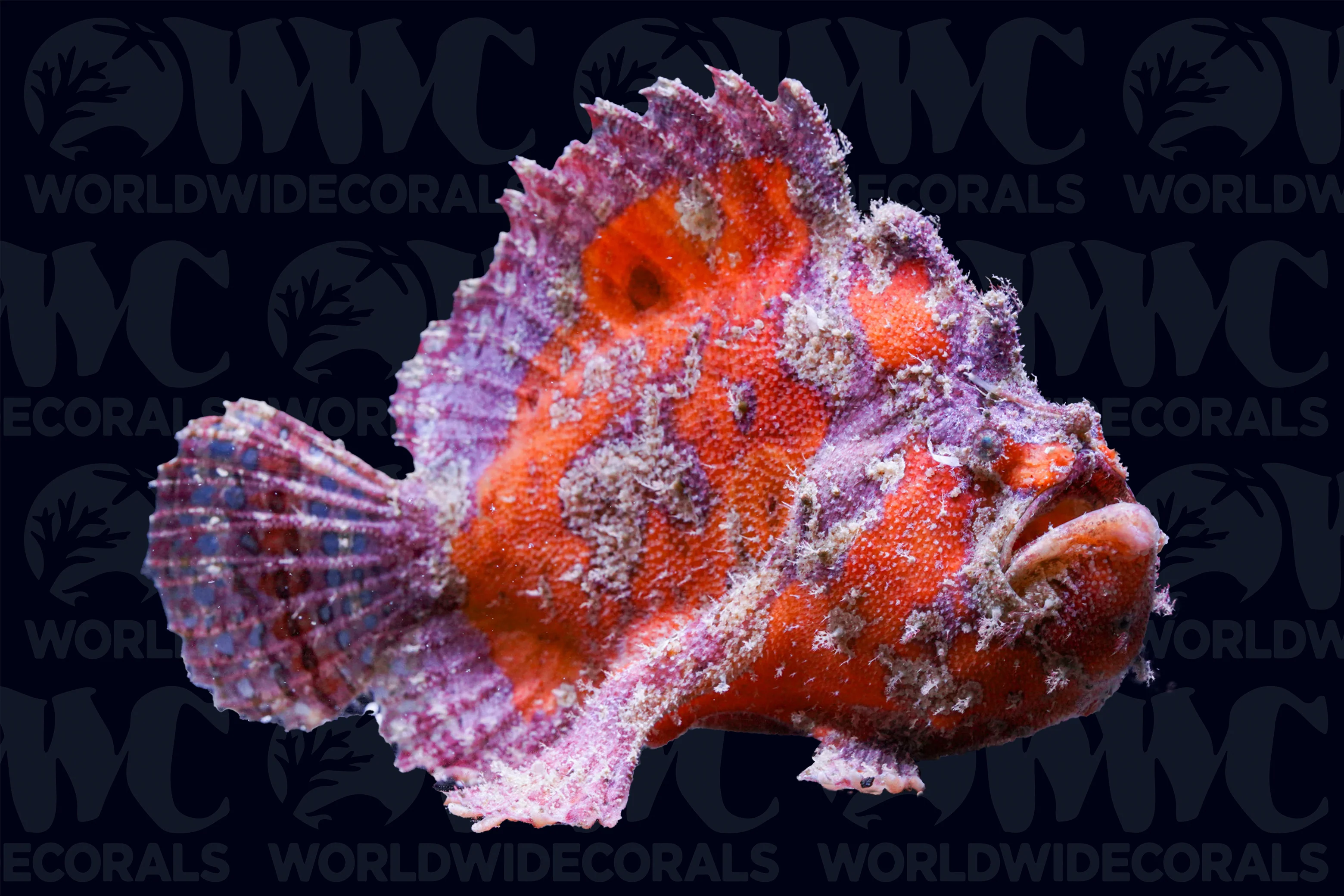
Shaggy Hispid Anglerfish - Philippines
Shaggy Hispid Anglerfish - Philippines
Antennarius hispidus
Anglers within this genus are not considered reef-safe due to their tendency to prey on fish or invertebrates small enough to fit into their mouths, yet they generally coexist well with corals. These fish possess the remarkable ability to change their coloration to blend with their surroundings. Lacking swim bladders, Anglerfish typically dwell near the bottom, so it's important to furnish their habitat with smooth rocks and substrate to prevent injury. Their coloration varies from white, light yellow, or tan to orange or black, sometimes in combination. Hispid Anglers, as carnivores, thrive on a diverse diet includes live foods such as fish, crustaceans, clams, and other meaty marine fare. Due to their slow metabolism, cautious feeding is advised to avoid overfeeding. Juveniles require feeding 3-4 times weekly, while adults suffice with a couple of feedings per week. These Anglers can reach up to 8 inches in size, requiring aquariums of at least 50 gallons or larger. In their natural habitat, Hispid Anglers frequent coral reefs with still waters in the Indo-West Pacific Ocean, typically at depths of up to 300 feet.
Anglers within this genus are not considered reef-safe due to their tendency to prey on fish or invertebrates small enough to fit into their mouths, yet they generally coexist well with corals. These fish possess the remarkable ability to change their coloration to blend with their surroundings. Lacking swim bladders, Anglerfish typically dwell near the bottom, so it's important to furnish their habitat with smooth rocks and substrate to prevent injury. Their coloration varies from white, light yellow, or tan to orange or black, sometimes in combination. Hispid Anglers, as carnivores, thrive on a diverse diet includes live foods such as fish, crustaceans, clams, and other meaty marine fare. Due to their slow metabolism, cautious feeding is advised to avoid overfeeding. Juveniles require feeding 3-4 times weekly, while adults suffice with a couple of feedings per week. These Anglers can reach up to 8 inches in size, requiring aquariums of at least 50 gallons or larger. In their natural habitat, Hispid Anglers frequent coral reefs with still waters in the Indo-West Pacific Ocean, typically at depths of up to 300 feet.
Select Size
Select Lot
From $35.00
Original: $99.99
-65%Shaggy Hispid Anglerfish - Philippines—
$99.99
$35.00Product Information
Product Information
Shipping & Returns
Shipping & Returns
Description
Antennarius hispidus
Anglers within this genus are not considered reef-safe due to their tendency to prey on fish or invertebrates small enough to fit into their mouths, yet they generally coexist well with corals. These fish possess the remarkable ability to change their coloration to blend with their surroundings. Lacking swim bladders, Anglerfish typically dwell near the bottom, so it's important to furnish their habitat with smooth rocks and substrate to prevent injury. Their coloration varies from white, light yellow, or tan to orange or black, sometimes in combination. Hispid Anglers, as carnivores, thrive on a diverse diet includes live foods such as fish, crustaceans, clams, and other meaty marine fare. Due to their slow metabolism, cautious feeding is advised to avoid overfeeding. Juveniles require feeding 3-4 times weekly, while adults suffice with a couple of feedings per week. These Anglers can reach up to 8 inches in size, requiring aquariums of at least 50 gallons or larger. In their natural habitat, Hispid Anglers frequent coral reefs with still waters in the Indo-West Pacific Ocean, typically at depths of up to 300 feet.
Anglers within this genus are not considered reef-safe due to their tendency to prey on fish or invertebrates small enough to fit into their mouths, yet they generally coexist well with corals. These fish possess the remarkable ability to change their coloration to blend with their surroundings. Lacking swim bladders, Anglerfish typically dwell near the bottom, so it's important to furnish their habitat with smooth rocks and substrate to prevent injury. Their coloration varies from white, light yellow, or tan to orange or black, sometimes in combination. Hispid Anglers, as carnivores, thrive on a diverse diet includes live foods such as fish, crustaceans, clams, and other meaty marine fare. Due to their slow metabolism, cautious feeding is advised to avoid overfeeding. Juveniles require feeding 3-4 times weekly, while adults suffice with a couple of feedings per week. These Anglers can reach up to 8 inches in size, requiring aquariums of at least 50 gallons or larger. In their natural habitat, Hispid Anglers frequent coral reefs with still waters in the Indo-West Pacific Ocean, typically at depths of up to 300 feet.